Nouvelle fonction destinée à explorer les liens entre les éléments des textes indexés
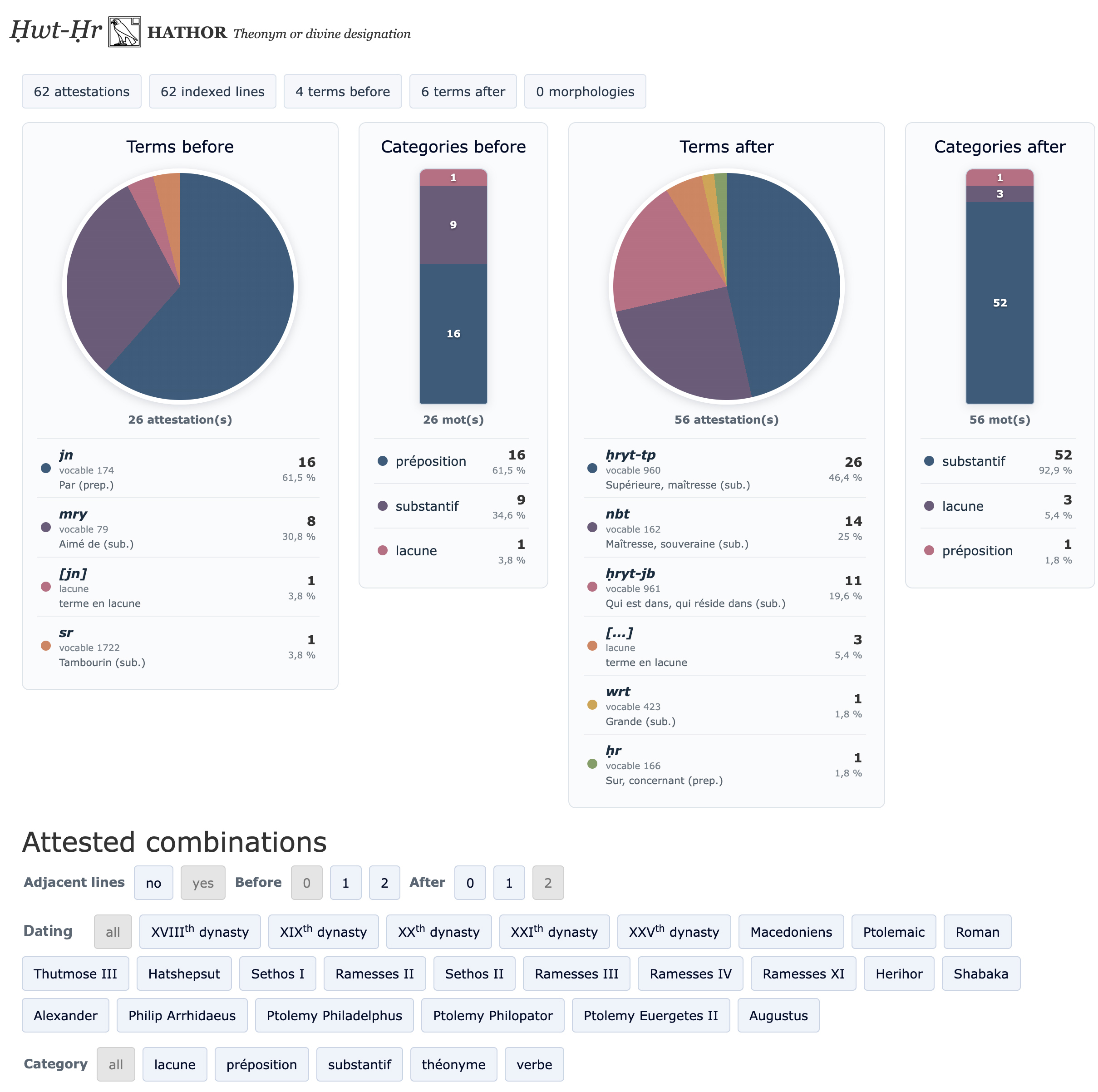
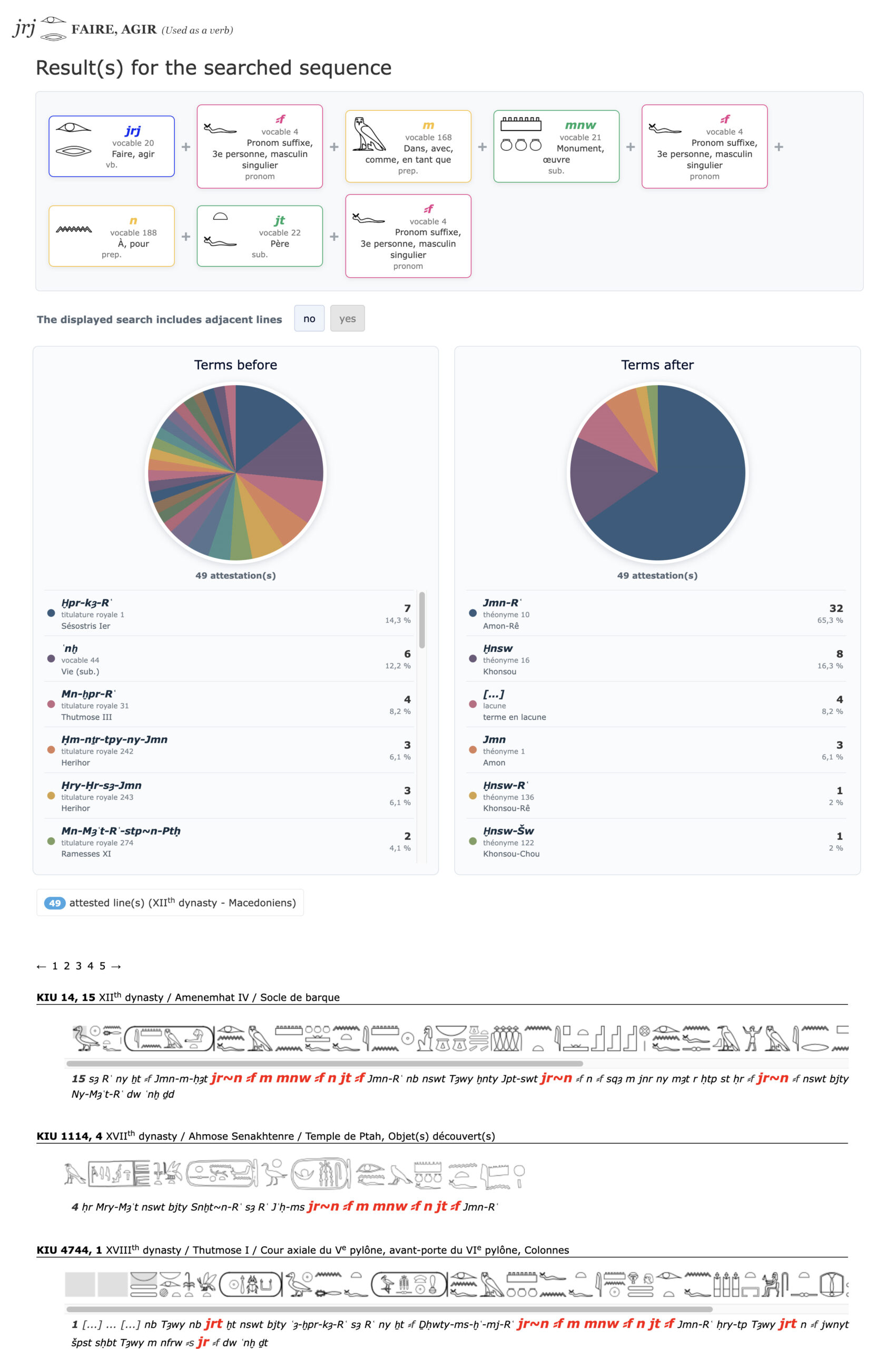
Le projet Karnak (CNRS, UMPV, LabEx Archimede ANR-11-LABX-0032-01, Programme « Investissement d’Avenir »), hébergé par l’IR* Huma-Num s’enrichit d’une nouvelle fonction destinée à explorer les liens entre les éléments des textes indexés. Depuis la notice d’un vocable, d’un toponyme, d’un élément de titulature ou de toute autre entrée indexée, l’onglet « Relations » affiche les termes présents dans son voisinage. Différents filtres permettent d’affiner les résultats. Il est ensuite possible de sélectionner plusieurs entrées afin d’accéder aux séquences correspondantes, puis aux KIU concernés.
Principes de fonctionnement et périmètre actuel
Les calculs sont effectués à partir des KIU dont le texte a été intégralement indexé, soit actuellement environ 4 600 documents. Les résultats concernent uniquement ces documents et s’enrichiront à mesure que progressera l’indexation. Le voisinage est calculé à l’échelle de la phrase, avec la possibilité d’étendre la recherche aux lignes adjacentes en activant cette option dans les filtres. Enfin, malgré les opérations de vérification effectuées sur les données, des erreurs ou des incohérences d’indexation peuvent subsister et affecter certains résultats. La recherche de relations et de séquences constitue ainsi un nouvel outil d’exploration du corpus de Karnak, qui donne accès à l’environnement textuel d’une entrée et aux inscriptions dans lesquelles apparaissent ces associations.
The Karnak Project introduces a new search feature: Relations and Sequences.
The Karnak Project (CNRS, UMPV, LabEx Archimede ANR-11-LABX-0032-01, “Investissements d’Avenir” programme), hosted by the IR* Huma-Num research infrastructure, now includes a new feature designed to explore relationships between elements within indexed texts. From the record for a lexical item, a toponym, an element of the royal titulary, or any other indexed entry, the “Relations” tab displays the terms occurring in its textual neighbourhood. Various filters can be used to refine the results. Multiple entries can then be selected to view the corresponding sequences and access the relevant KIUs.
This feature complements the search options currently available. Beyond searching for attestations of a single element, it makes it easier to identify recurring expressions or specific configurations, while retaining direct access to the corresponding inscriptions.
Principles of operation and current scope
The calculations are based on KIUs whose texts have been fully indexed, currently representing approximately 4,600 documents. The results therefore concern only these documents and will expand as indexing progresses.
The textual context is calculated at sentence level, with the option to extend the search to adjacent lines by activating this setting in the filters.
Finally, despite the checks carried out on the data, indexing errors or inconsistencies may still remain and may affect some results.
The Relations and Sequences search thus provides a new tool for exploring the Karnak corpus, giving access both to the textual environment of an indexed entry and to the inscriptions in which these associations occur.
مشروع الكرنك بيضيف خاصية بحث جديدة: العلاقات والتتابعات
يقدّم مشروع الكرنك (CNRS، وUMPV، وLabEx Archimede ANR-11-LABX-0032-01، برنامج «الاستثمارات من أجل المستقبل»)، الذي تستضيفه البنية التحتية البحثية IR* Huma-Num، وظيفة جديدة مخصّصة لاستكشاف الروابط بين عناصر النصوص المفهرسة. انطلاقًا من بطاقة مفردة، أو اسم مكان، أو عنصر من عناصر الألقاب الملكية، أو أي مدخل مفهرس آخر، تعرض علامة التبويب «العلاقات» المصطلحات الواردة في سياقه النصي. وتتيح مجموعة من المرشّحات تنقيح النتائج. ويمكن بعد ذلك اختيار عدة مداخل للاطلاع على التسلسلات المقابلة، ثم الوصول إلى وثائق KIU المعنية.
الخاصية دي بتكمّل طرق البحث المتاحة حاليًا. فبدل ما البحث يقتصر على شواهد عنصر واحد بس، هي بتسهّل التعرّف على الصيغ المتكررة أو التراكيب المعيّنة، مع الحفاظ على إمكانية الوصول المباشر للنقوش المرتبطة بيها
مبادئ العمل والنطاق الحالي
الحسابات بتعتمد على الـ KIU اللي نصوصها اتفهرست بالكامل، وده حاليًا بيمثل حوالي 4600 وثيقة. وبالتالي النتائج بتخص الوثائق دي بس، وهتتوسع تدريجيًا مع تقدّم عملية الفهرسة
السياق القريب بيتحسب على مستوى الجملة، مع إمكانية توسيع البحث للسطور المجاورة عن طريق تفعيل الاختيار ده في الفلاتر
وأخيرًا، رغم عمليات المراجعة اللي اتعملت على البيانات، ممكن تفضل موجودة بعض أخطاء أو حالات عدم الاتساق في الفهرسة، وده ممكن يأثر على بعض النتائج
وبكده، البحث في العلاقات والتتابعات بيوفّر أداة جديدة لاستكشاف corpus الكرنك، وبيتيح الوصول للسياق النصي المحيط بأي مدخل مفهرس، وكمان للنقوش اللي بتظهر فيها الارتباطات دي